
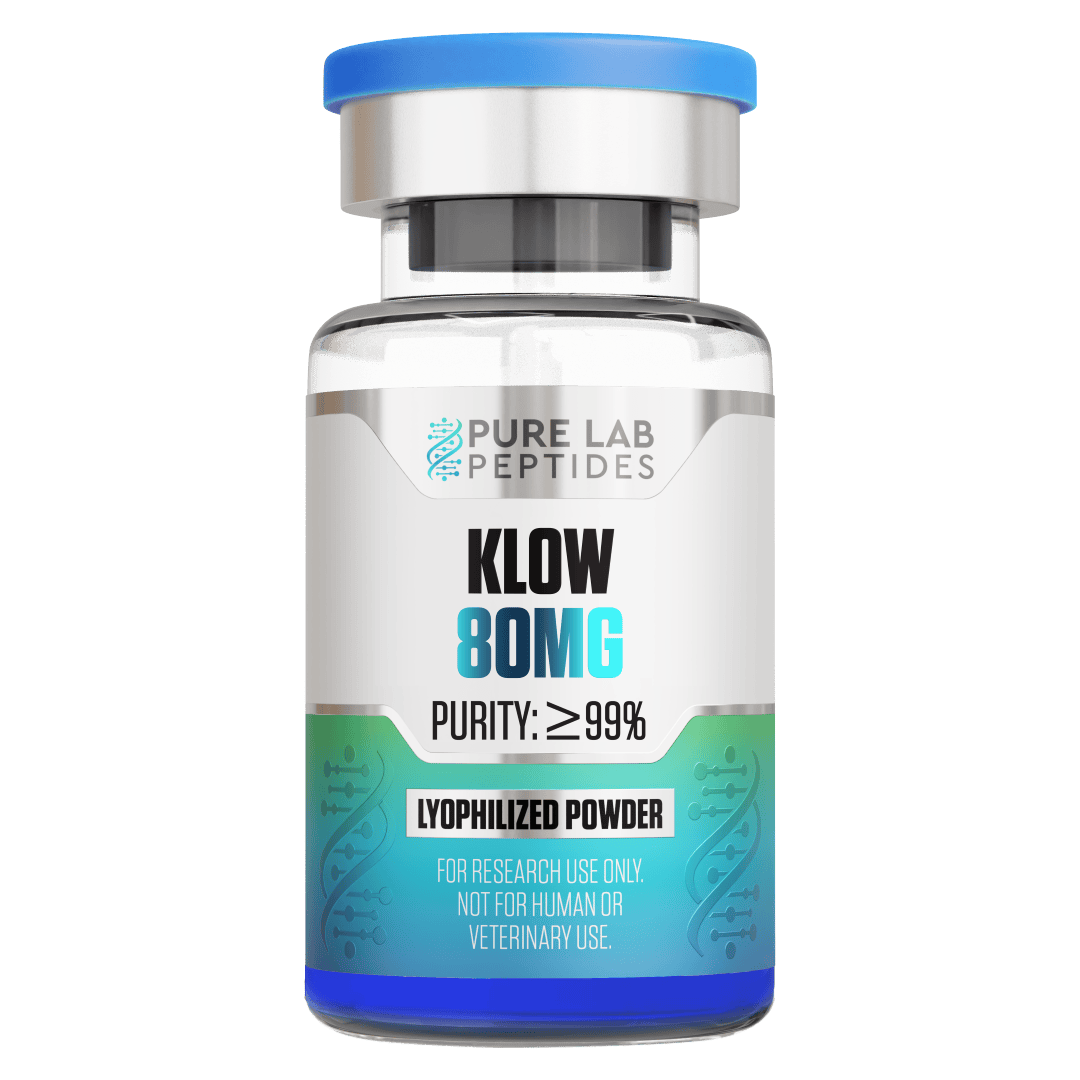
KLOW (TB-500 10mg + BPC-157 10mg + KPV 10mg + GHK-Cu 50mg): Understanding Peptide Research
Introduction to KLOW Peptide Research
The field of peptide science continues to expand as researchers explore different compounds to understand molecular structures, cellular interactions, and biological processes. Modern biotechnology has enabled scientists to examine peptide combinations in controlled laboratory environments and collect valuable scientific information.
KLOW is a peptide blend combining TB-500, BPC-157, KPV, and GHK-Cu. Researchers study peptide combinations to better understand their molecular characteristics, composition, and behaviour during scientific analysis.
For those searching for Buy KLOW (TB-500 10mg + BPC-157 10mg + KPV 10mg + GHK-Cu 50mg) information, it is important to understand the research context and limitations of experimental materials. Research peptides are intended for laboratory investigation and should not be considered approved medicines or substitutes for professional healthcare advice.
Understanding Peptide Blends
Peptide blends combine multiple peptide compounds into a single research formulation. Scientists investigate these combinations to analyse molecular properties and understand how different peptide structures can be evaluated together.
Peptides are short chains of amino acids that are widely studied within biotechnology and molecular biology. Research into peptides helps scientists explore biological communication, molecular interactions, and cellular mechanisms.
Scientific investigations involving peptide blends may focus on:
- Molecular structure analysis
- Laboratory evaluation methods
- Compound stability research
- Biological pathway studies
- Scientific comparison studies
These areas of research contribute to a better understanding of complex biological systems.
What Is TB-500 Research?
TB-500 is a peptide-related compound studied within experimental research environments. Scientists examine its molecular properties and characteristics to better understand peptide behaviour under controlled laboratory conditions.
Research involving TB-500 focuses on collecting scientific data and analysing molecular features. These studies contribute to broader peptide research and help scientists understand how different compounds behave.
Experimental findings require careful interpretation and should always be considered within the correct scientific framework.
Understanding BPC-157 Research
BPC-157 is another peptide compound investigated within laboratory research. Scientists study its molecular structure and characteristics to expand knowledge of peptide science.
Research into BPC-157 involves controlled laboratory evaluation and scientific analysis. These investigations allow researchers to gather information about peptide behaviour and contribute to wider biotechnology research.
Accurate documentation and reliable research methods are essential when studying experimental compounds.
Exploring KPV and GHK-Cu Research
KPV and GHK-Cu are peptide-related compounds that have also been discussed within scientific research. Scientists investigate these molecules to better understand their structures, properties, and potential relevance within laboratory studies.
GHK-Cu is a copper-binding peptide studied within peptide chemistry, while KPV is examined as part of broader peptide research. Scientists use controlled studies to analyse molecular characteristics and gather scientific data.
Those exploring Buy KLOW (TB-500 10mg + BPC-157 10mg + KPV 10mg + GHK-Cu 50mg) resources should focus on reliable information, transparent documentation, and responsible research practices.
Importance of Research Quality and Documentation
Quality standards play an important role in scientific research. Researchers depend on accurate information about experimental materials to maintain consistency and reliability during laboratory studies.
Important factors when evaluating research compounds may include:
- Clear compound identification
- Technical specifications
- Quality testing information
- Research documentation
- Storage recommendations
Proper documentation supports better scientific analysis and helps researchers understand the materials they are studying.
Research Use Only and Regulatory Awareness
Experimental peptides are generally classified as research-use materials. This means they are intended for scientific investigation and have not necessarily completed the regulatory processes required for approved medical products.
The development of approved healthcare products involves extensive research, safety evaluation, and regulatory assessment. A compound studied in a laboratory environment does not automatically become an approved treatment.
Researchers should follow suitable laboratory procedures, safety guidelines, and applicable regulations when handling experimental materials.
Choosing Reliable Research Materials
For researchers in the UK, selecting reliable and transparent research materials is an important consideration. A responsible supplier should provide clear information and maintain accurate communication about scientific products.
Before selecting research materials, researchers may consider:
- Available technical information
- Research documentation
- Quality assurance details
- Handling guidance
- Supplier transparency
Responsible sourcing supports scientific integrity and helps maintain appropriate research standards.
Storage and Handling Considerations
Proper storage and handling are essential aspects of maintaining research material quality. Peptide compounds may require specific conditions to preserve their characteristics during laboratory evaluation.
Researchers should follow recommended storage procedures and apply suitable handling methods. Maintaining proper conditions helps protect sample quality and supports reliable research outcomes.
Careful management of experimental materials is an important part of laboratory quality control.
Future of Peptide Research
The biotechnology sector continues to develop as scientists create improved methods for analysing peptides and molecular systems. Advanced research tools allow scientists to examine structures and interactions with increasing precision.
Future peptide studies may provide additional insights into molecular biology and cellular processes. However, responsible investigation, accurate reporting, and evidence-based evaluation remain essential for scientific progress.
Conclusion
KLOW represents an area of interest within experimental peptide research, combining multiple peptide compounds studied by scientists to understand molecular characteristics and interactions.
Those searching for Buy KLOW (TB-500 10mg + BPC-157 10mg + KPV 10mg + GHK-Cu 50mg) information should prioritise reliable research resources, transparent documentation, and responsible scientific practices. Experimental materials should always be approached within appropriate laboratory frameworks.
As biotechnology continues to evolve, peptide research will remain an important field for expanding scientific knowledge and improving understanding of molecular systems.
Reviews
There are no reviews yet.