
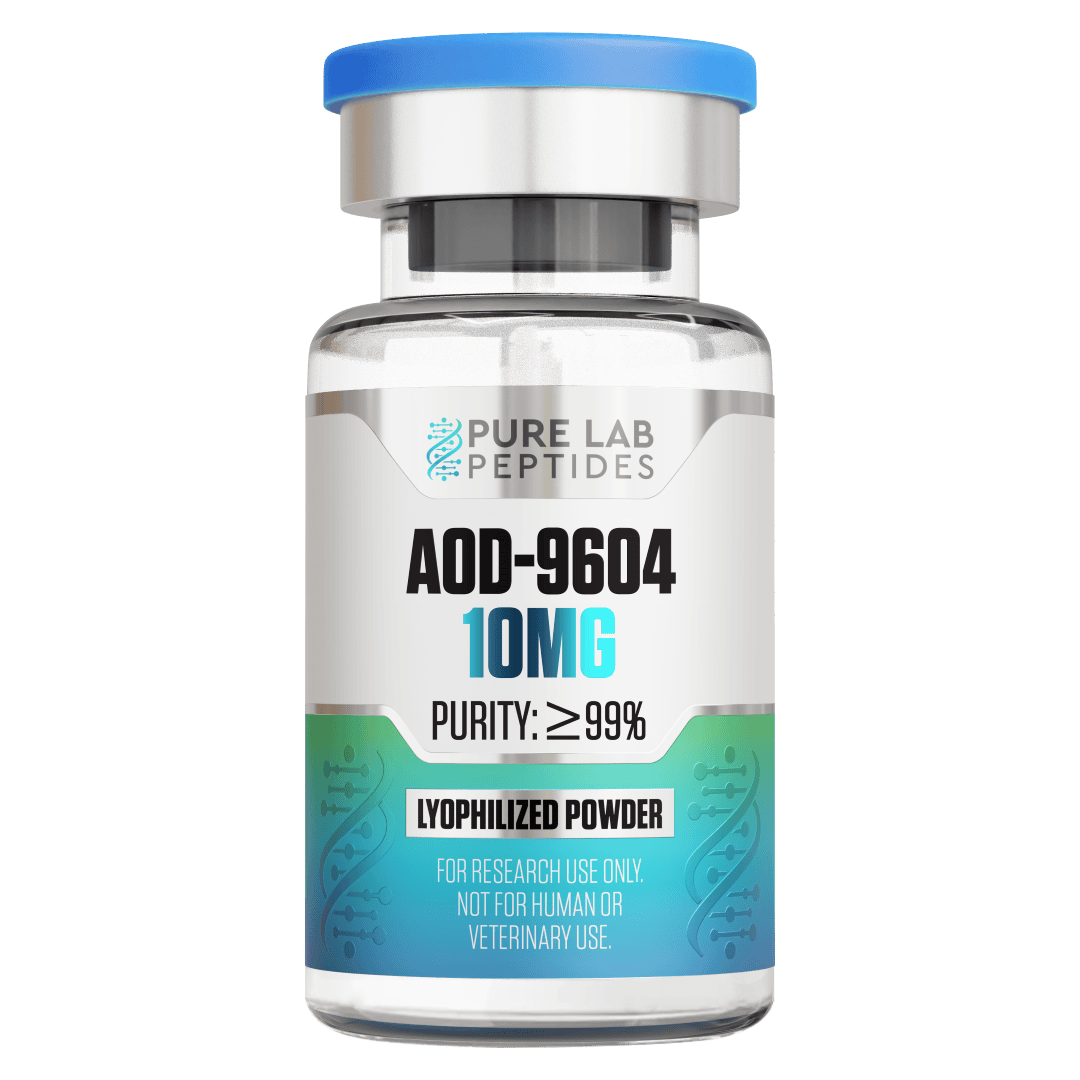
AOD-9604 10mg: Comprehensive Research Overview, Peptide Science, and Metabolic Research in the UK
AOD-9604 10mg is a synthetic peptide fragment derived from human growth hormone (hGH) that has attracted significant attention within peptide science, metabolic research, and molecular biology. Originally developed as a modified fragment of the growth hormone molecule, AOD-9604 was designed to isolate specific metabolic properties associated with fat metabolism while avoiding many of the broader biological effects linked to full-length growth hormone. Researchers continue to investigate AOD-9604 in laboratory settings to better understand its mechanisms, signalling pathways, and potential applications in metabolic research. (Peptide Database)
Across the United Kingdom, scientific interest in peptide-based compounds has increased substantially as researchers explore how targeted peptides influence cellular communication, tissue-specific activity, and metabolic regulation. AOD-9604 remains one of the most widely discussed growth hormone fragments in modern peptide research. This educational guide explores AOD-9604 10mg, its scientific background, research applications, and importance within contemporary peptide science.
What Is AOD-9604?
AOD-9604, often referred to as HGH Fragment 176-191, is a synthetic peptide developed from a specific region of the human growth hormone molecule. Scientists originally identified this portion of growth hormone as being associated with lipid metabolism and adipose tissue signalling. To improve stability, researchers modified the fragment by introducing a tyrosine residue at the N-terminus, creating the compound known as AOD-9604. (Peptidepedia)
Researchers commonly investigate AOD-9604 in relation to:
- Metabolic signalling pathways
- Adipose tissue biology
- Cellular communication systems
- Peptide-receptor interactions
- Growth hormone fragment research
- Molecular biology studies
- Experimental metabolic models
These research areas continue to drive scientific interest in this peptide compound. (Peptide Database)
Understanding Growth Hormone Fragments
Growth hormone is a complex protein composed of multiple amino acid sequences that influence different biological processes. Researchers discovered that specific regions of the hormone may be responsible for distinct physiological functions.
Scientific investigations involving growth hormone fragments often focus on:
- Cellular signalling mechanisms
- Tissue-specific biological activity
- Metabolic regulation pathways
- Molecular communication networks
- Protein interaction systems
- Biological adaptation processes
AOD-9604 was developed to study one particular region of the growth hormone molecule associated with metabolic activity. (Peptidepedia)
Research Applications of AOD-9604 10mg
AOD-9604 10mg is primarily used within laboratory and scientific research environments. Researchers utilise controlled models to investigate peptide-mediated biological activity and metabolic signalling pathways.
Common research applications include:
- Molecular biology studies
- Metabolic pathway investigations
- Cellular communication research
- Adipose tissue analysis
- Experimental biotechnology
- Growth hormone fragment studies
- Peptide signalling research
These applications contribute to a broader understanding of biological regulation and peptide science. (PeptideInsight)
AOD-9604 and Metabolic Research
One of the primary reasons researchers study AOD-9604 is its relationship with metabolic biology. Scientific investigations have examined how this peptide fragment interacts with pathways involved in lipid metabolism and adipose tissue regulation.
Research areas frequently include:
- Fat metabolism pathways
- Lipid signalling mechanisms
- Cellular energy regulation
- Adipocyte biology
- Metabolic communication systems
- Tissue-specific biological responses
Understanding these processes helps researchers explore how cellular systems coordinate energy utilisation and storage. (Peptide Database)
Cellular Communication and Molecular Signalling
Peptides function as biological messengers that help coordinate communication between cells and tissues. Researchers investigate AOD-9604 because it provides insight into how growth hormone fragments may influence molecular signalling networks.
Current scientific investigations examine:
- Signal transduction pathways
- Cellular response mechanisms
- Molecular communication systems
- Regulatory signalling networks
- Biological adaptation processes
- Peptide-receptor interactions
These studies remain central to modern molecular biology and biotechnology research. (Peptide Breakdown)
Why Peptide Research Continues to Expand
Peptide science is among the fastest-growing fields within biotechnology and life sciences. Advances in analytical technology have enabled researchers to investigate peptide activity with increasing precision.
Current areas of interest include:
- Precision peptide engineering
- Molecular pathway analysis
- Cellular communication research
- Metabolic biology
- Tissue-specific signalling
- Experimental biotechnology
AOD-9604 continues to attract attention because it represents a highly targeted approach to studying growth hormone fragment biology. (Peptide Authority)
Scientific Importance of AOD-9604
Researchers remain interested in AOD-9604 because it offers a unique opportunity to study specific growth hormone-related pathways without investigating the entire hormone molecule.
Fields commonly associated with AOD-9604 research include:
- Molecular biology
- Metabolic science
- Cellular physiology
- Biotechnology
- Biochemistry
- Peptide research
These disciplines collectively contribute to a greater understanding of biological regulation and peptide-mediated communication. (PeptideInsight)
Quality Standards in Peptide Research
High-quality research materials are essential for reliable scientific outcomes. Laboratories typically evaluate peptide products according to strict analytical criteria.
Important quality considerations include:
- Identity verification
- Purity assessment
- Batch consistency
- Analytical validation
- Quality-control procedures
- Independent laboratory testing
These standards help ensure reproducibility and scientific integrity within research environments.
Storage and Handling Recommendations
Proper storage and handling procedures help maintain peptide stability and preserve research quality.
Recommended practices include:
- Store in a cool, dry location
- Protect from excessive heat and moisture
- Avoid prolonged exposure to direct sunlight
- Follow laboratory handling protocols
- Maintain clean research conditions
- Follow manufacturer recommendations
Appropriate storage supports long-term stability and product integrity. (Peptide Database)
Regulatory Information
AOD-9604 is commonly referenced as a research peptide and remains a subject of ongoing scientific investigation. It is not licensed as a medicine in the UK and should be handled in accordance with applicable regulations, institutional policies, and laboratory safety requirements. Educational information provided regarding AOD-9604 is intended solely for research and informational purposes.
Conclusion
AOD-9604 10mg is a synthetic growth hormone fragment that continues to play an important role in peptide science, metabolic research, and molecular biology. Its relevance to adipose tissue biology, cellular signalling, and metabolic regulation has made it a valuable subject of scientific investigation. Researchers continue exploring how growth hormone fragments interact with biological systems and contribute to cellular communication pathways. (PeptideInsight)
As peptide science advances, AOD-9604 remains an important research compound for studying metabolic signalling, tissue-specific biology, and molecular regulation. Ongoing laboratory investigations continue to expand scientific understanding of peptide-mediated communication and the complex biological mechanisms that govern cellular function and adaptation. (Peptidology)
Reviews
There are no reviews yet.