
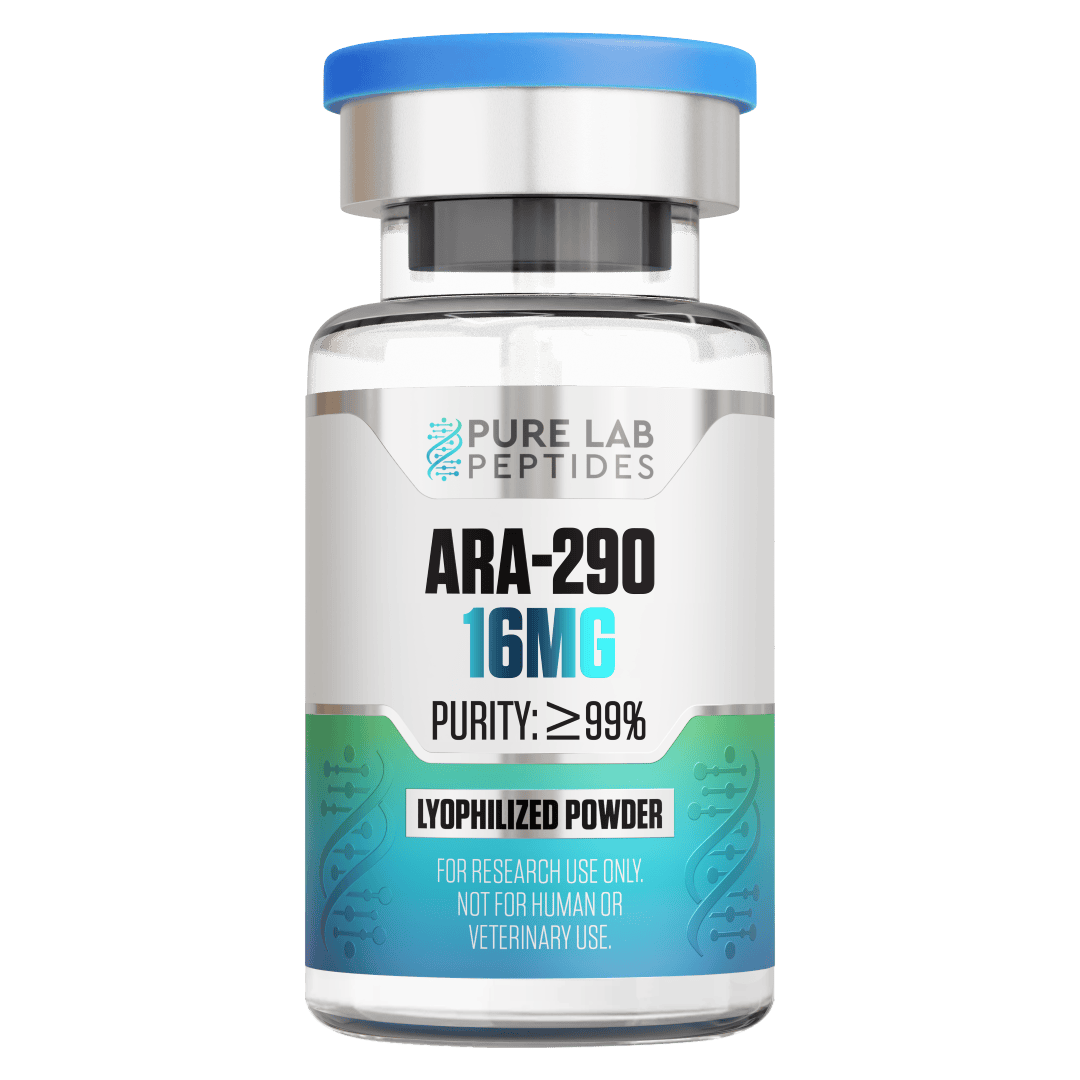
Ara-290 16mg: Comprehensive Research Overview, Peptide Science, and Tissue Repair Research in the UK
Ara-290 16mg is a synthetic peptide analogue derived from a specific region of erythropoietin (EPO) that has attracted significant attention in molecular biology, immunology, neurobiology, and tissue-repair research. Unlike erythropoietin’s primary role in red blood cell production, Ara-290 was developed to selectively target tissue-protective and anti-inflammatory signalling pathways without stimulating erythropoiesis. Researchers continue to investigate Ara-290 in laboratory settings to better understand its mechanisms of action in cellular protection, inflammatory modulation, and regenerative biology. (peptideinsight.com)
Across the United Kingdom, peptide science has become an expanding field within biotechnology and life-science research. Compounds such as Ara-290 are studied to explore how targeted peptide signalling can influence inflammation, nerve repair, tissue regeneration, and cellular stress responses. This educational guide provides an in-depth overview of Ara-290 16mg, its scientific background, research applications, and relevance in modern peptide research.
What Is Ara-290?
Ara-290 is a synthetic peptide derived from the helix B region of erythropoietin. It was designed to separate the tissue-protective and anti-inflammatory properties of EPO from its hematopoietic (red blood cell stimulating) effects. As a result, Ara-290 is primarily investigated for its role in non-erythropoietic signalling pathways.
Researchers commonly study Ara-290 in relation to:
- Tissue protection mechanisms
- Anti-inflammatory signalling pathways
- Cellular stress response systems
- Neuroprotection research models
- Immune system regulation
- Molecular communication pathways
- Regenerative biology studies
These areas continue to drive scientific interest in Ara-290 within experimental research environments.
Understanding Erythropoietin-Derived Peptides
Erythropoietin (EPO) is a naturally occurring hormone best known for regulating red blood cell production. However, scientific research has shown that certain regions of the EPO molecule may also play roles in tissue protection and cellular repair.
Researchers investigating EPO-derived peptides focus on:
- Cellular signalling mechanisms
- Tissue-protective pathways
- Anti-inflammatory responses
- Molecular adaptation processes
- Protein-receptor interactions
- Biological stress responses
Ara-290 was developed to isolate these protective effects without activating erythropoiesis-related pathways. (peptideprotocolwiki.com)
Mechanism of Action in Research Models
Ara-290 is studied for its interaction with the innate repair receptor (IRR), a receptor complex associated with tissue protection and anti-inflammatory signalling. By engaging this pathway, researchers examine how cells respond to injury, inflammation, and stress conditions.
Scientific investigations focus on:
- IRR signalling pathways
- Anti-inflammatory responses
- Cellular repair mechanisms
- Tissue protection systems
- Neuroimmune communication
- Molecular stress responses
These studies help researchers better understand how peptide signalling influences biological resilience. (peptideinsight.com)
Research Applications of Ara-290 16mg
Ara-290 16mg is primarily used in controlled laboratory and scientific research environments. Researchers utilise experimental models to explore its biological effects on cellular systems.
Common research applications include:
- Inflammation research
- Neuroprotection studies
- Cellular biology investigations
- Tissue regeneration models
- Immune system research
- Molecular signalling analysis
- Experimental biotechnology
These applications contribute to a broader understanding of tissue repair and inflammatory regulation.
Neuroprotection and Nervous System Research
One of the key areas of interest for Ara-290 involves neuroprotection research. Scientists investigate how inflammatory and stress-related pathways affect nerve cells and neural tissue integrity.
Research models explore:
- Neuronal survival pathways
- Neuroinflammatory signalling
- Cellular repair mechanisms in nervous tissue
- Glial cell interactions
- Neuroimmune communication systems
- Molecular adaptation processes
These studies aim to improve understanding of how the nervous system responds to injury and inflammation. (peptideprotocolwiki.com)
Inflammation and Tissue Repair Research
Inflammation is a critical biological response that plays a role in tissue protection and healing. However, excessive or chronic inflammation can contribute to cellular damage. Ara-290 is studied for its potential role in modulating inflammatory signalling pathways in experimental models.
Researchers examine:
- Cytokine signalling pathways
- Cellular inflammation responses
- Tissue repair mechanisms
- Immune cell communication
- Molecular stress regulation
- Biological recovery systems
Understanding these processes is essential in modern regenerative biology research. (peptideinsight.com)
Cellular Communication and Molecular Signalling
Cells rely on complex communication systems to maintain biological balance and respond to environmental stress. Peptides such as Ara-290 are studied because they influence signalling pathways involved in tissue protection and repair.
Scientific investigations focus on:
- Signal transduction pathways
- Cellular response mechanisms
- Receptor-mediated signalling
- Molecular communication networks
- Tissue-specific adaptation
- Immune system interaction pathways
These mechanisms are central to understanding how biological systems maintain homeostasis.
Why Peptide Research Continues to Expand
Peptide science is one of the fastest-growing fields in biotechnology and molecular life sciences. Advances in analytical tools and molecular techniques have significantly improved the ability to study peptide behaviour in biological systems.
Current research areas include:
- Precision peptide engineering
- Cellular signalling studies
- Molecular pathway analysis
- Tissue regeneration research
- Neuroimmune interaction studies
- Systems biology modelling
Ara-290 continues to be an important research compound due to its unique dual role in neuroprotection and inflammation modulation.
Scientific Importance of Ara-290
Researchers study Ara-290 because it represents a specialised peptide model for understanding tissue protection without stimulating erythropoiesis. This makes it valuable for investigating non-hematopoietic pathways of erythropoietin signalling.
Scientific disciplines associated with Ara-290 include:
- Molecular biology
- Immunology
- Neuroscience
- Biochemistry
- Regenerative medicine research
- Biotechnology
These fields contribute to a broader understanding of how peptides regulate biological systems.
Quality Standards in Research
Reliable scientific outcomes require strict quality control standards. Laboratories evaluate peptide materials using established analytical methods to ensure consistency and accuracy.
Important quality measures include:
- Identity verification testing
- Purity analysis
- Batch consistency checks
- Manufacturing quality control
- Independent laboratory validation
- Documentation and traceability
These standards help ensure reproducibility in experimental research.
Storage and Handling Recommendations
Proper storage and handling are essential to maintain peptide stability and research integrity.
Recommended practices include:
- Store in a cool, dry environment
- Protect from heat and moisture
- Avoid direct sunlight exposure
- Follow laboratory protocols
- Maintain sterile handling conditions
- Adhere to manufacturer guidance
These practices help preserve product quality during research use.
Regulatory Information
Ara-290 16mg is commonly supplied as a research peptide intended for laboratory investigation only. It is not approved as a medicinal product for human therapeutic use in the UK or other regulated markets. All research involving Ara-290 should comply with applicable UK regulations, institutional policies, and laboratory safety requirements.
Conclusion
Ara-290 16mg is a synthetic erythropoietin-derived peptide that continues to attract scientific interest in inflammation research, neuroprotection, and tissue regeneration studies. Its ability to selectively target tissue-protective pathways without stimulating red blood cell production makes it a valuable tool in molecular biology and peptide science.
As research advances, Ara-290 remains an important compound for studying cellular communication, inflammatory regulation, and neuroimmune interactions. Ongoing laboratory investigations continue to expand scientific understanding of peptide-mediated protection mechanisms and their role in biological systems.


Reviews
There are no reviews yet.